
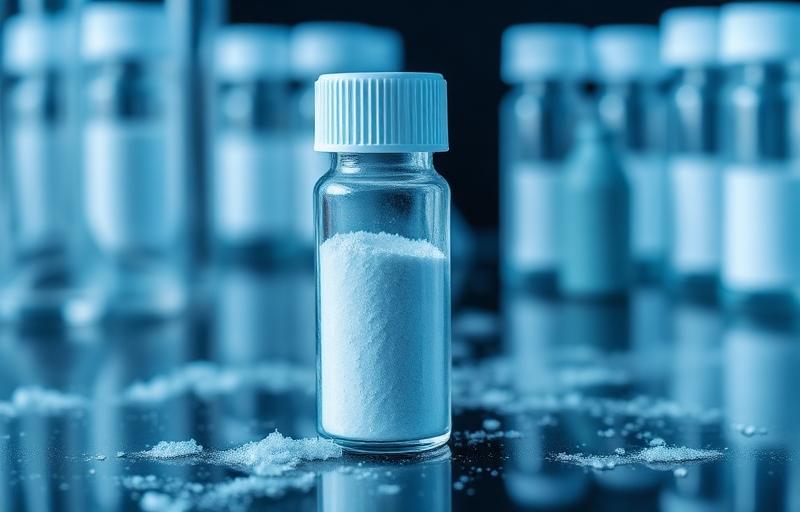
Why lyophilization matters
Peptides are vulnerable to hydrolysis, oxidation, aggregation, and deamidation. Removing water through lyophilization reduces several of these pathways and allows the compound to remain stable for longer periods before use.
A dry peptide cake is not automatically stable under all conditions. The storage environment still determines whether the material retains its intended purity profile over time.
Cold storage and moisture control
Low temperature slows chemical degradation, but moisture control is equally important. Repeatedly opening vials, exposing material to humid air, or allowing condensation during temperature changes can shorten usable life even when the vial is kept cold.
Best practice is to keep unopened lyophilized vials sealed, protected from light, and stored at the validated temperature range. Before opening, allow the vial to equilibrate while sealed to reduce condensation risk.
After reconstitution
Once reconstituted, the peptide returns to an aqueous environment where degradation can accelerate. Storage at 2–8 °C is common for short-term working solutions, but each compound should be treated according to its own validation data.
Repeated freeze-thaw cycles should be avoided. If a study requires multiple time points, aliquoting the reconstituted solution can preserve consistency across the experiment.
What to document
A stability-conscious workflow documents receipt date, storage temperature, first opening, reconstitution date, diluent, concentration, and discard date. These details help explain unexpected shifts in assay behaviour.
For publication-quality work, purity confirmation by HPLC and identity confirmation by mass spectrometry remain the strongest way to validate that storage conditions have preserved the material.