
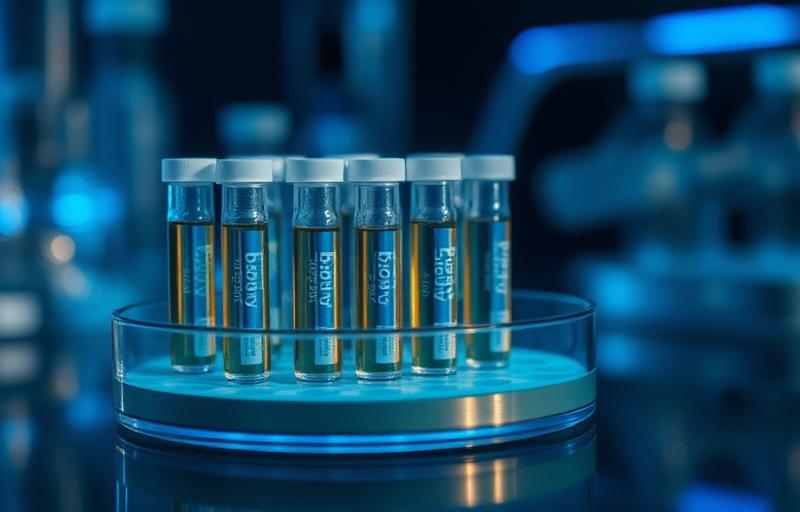
Why tendon models are difficult
Tendon tissue is dense, poorly vascularised, and slow to remodel. In laboratory models, that makes repair difficult to measure because the response depends on both cellular migration and matrix organisation rather than simple proliferation alone.
BPC-157 is useful in this context because it is studied as a signalling modulator, not as a structural replacement. Researchers use it to examine whether tendon-derived fibroblasts move more efficiently into damaged zones and whether collagen-alignment markers improve under controlled conditions.
Observed cellular effects
Across in vitro tendon and ligament models, BPC-157 is commonly associated with increased fibroblast outgrowth, improved cell survival under stress, and stronger migration across scratch-assay gaps. These endpoints are valuable because they can be quantified without introducing whole-animal variables.
The peptide is also linked to nitric-oxide pathway modulation. That matters because nitric oxide affects vascular tone, inflammatory signalling, and collagen deposition — three processes that shape the quality of tendon repair.
Angiogenesis and matrix repair
Tendon regeneration depends on temporary vascular support. BPC-157 research often reports increased expression of angiogenic markers such as VEGF-related pathways, suggesting that it may support the early vascular phase required before mature matrix remodelling can occur.
In controlled culture environments, the most relevant readouts are collagen I/III balance, fibroblast orientation, and matrix density. A stronger signal across these markers indicates a more organised repair process rather than uncontrolled scar-like deposition.
Laboratory handling notes
For reproducible work, lyophilized BPC-157 should be stored cold, protected from moisture, and reconstituted with sterile technique. Avoid repeated freeze-thaw cycles after reconstitution because peptide degradation can alter dose-response behaviour.
Every tendon-regeneration experiment should document lot purity, reconstitution medium, storage window, and assay timing. Small differences in handling can produce large differences in migration and viability readouts.